
In the last article I discussed common traits of scammers – think bad grammar and spelling, poor grasp of normal language syntax and phrases, frequent mentions of god or religion, as well as the more insidious fraud of identity theft (usually stealing people’s photos and videos from social media) and the spinning of downright lies designed to draw victims in, preying on sympathy and generosity.

The FTC) says, “romance scammers lure people with phony online profiles, often lifting photos from the web to create attractive and convincing personas. They might make up names or assume the identities of real people. Reports indicate the scammers are active on dating apps, but also on social media sites that aren’t generally used for dating. For example, many people say the scam started with a Facebook message.”
Australia’s ACCC has excellent information on its page about common scamming ‘red flags’ or techniques, warning signs, how to protect yourself, real life stories and clues for spotting a fake profile. Choice magazine also has a thorough examination of the practice and detailed tips.
A reminder again – if something seems too good to be true, it probably is. And, never give money to people you have only ‘met’ online and never met in person.
The popular demographics of people scammed
People (who said they were) aged from 40 to 69 reported losing money to romance scams affecting Americans at the highest rates – more than twice the rate of people in their twenties. At the same time, people 70 and over reported the highest individual median losses at $10,000.
The largest cohort of Australians who lost money to scammers or reported them were aged between 34 and 64, and 55.5% were women (43.3% men and 1.3% other). American and British stats are similar. The most popular channel that scammers used was social media (33/7%) the internet more broadly or mobile apps, including dating sites.
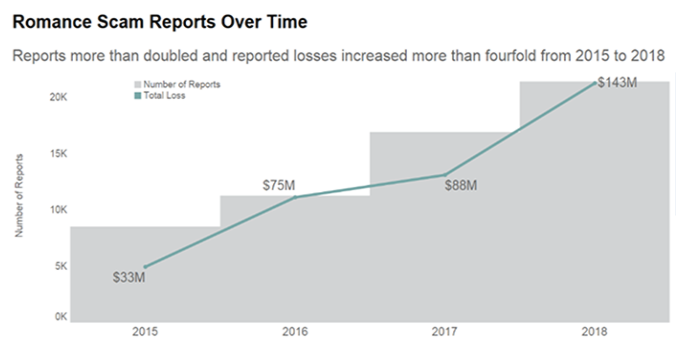
In my first article on romance scams I cited 2018 figures of 21,000 reports about romance scams, where people reported losing a total of $143 million. It’s important to note here that these are only the scams that are reported, so it’s impossible to guess how many people are too embarrassed or ashamed to admit to financial or other abuses.
What’s worse – losing money or hope?
Losses often run into the hundreds of thousands but it’s the emotional manipulation and abuse that really scars.
“It’s a big problem because of the emotional devastation. We hear stories of suicides related to online dating scams. I think they’re one of the nastiest of the scams going around,” says ACCC deputy chair Delia Rickard.
A fascinating report, The Psychology of the Online Dating Romance Scam, was conducted over a year-long period by Professor Monica Whitty of The University of Leicester.
She described the phenomenon of ‘hyper-personal’ relationships – the perfect name for what I’ve experienced many times with people online. She also said that “individuals [regardless of gender] higher on romantic beliefs were more likely to be victims of the scam.”
Whitty describes the pressure the scammer increases on the victims through love-bombing. “The victims often stated that they felt closer to the fictitious relationship than any other previous relationship.”
The research examined the emotional and psychological impact on the victims after the scam.
“All participants were affected negatively by the scam. They suffered a range of emotions and effects, including shame, embarrassment, shock, anger, worry, stress, fear, depression, suicidal feelings and post-traumatic stress disorder. Some described the feeling of being mentally raped.
“None of the victims interviewed had appeared to fully recover from the crime. Techniques some were using to cope included writing down their thoughts, working on campaigns to raise awareness of the crime, and thinking positively about a new life.”
In 2015, BBC News reported yet another scammer’s conviction in Britain for defrauding women of 250,000 pounds. An investigating police officer said that it was “an example of how an individual could sit in front of a computer and destroy another person’s life.”
When another victim is just a mouse-click away, it seems that personal culpability can be easily denied, even on the cusp of a prison sentence.
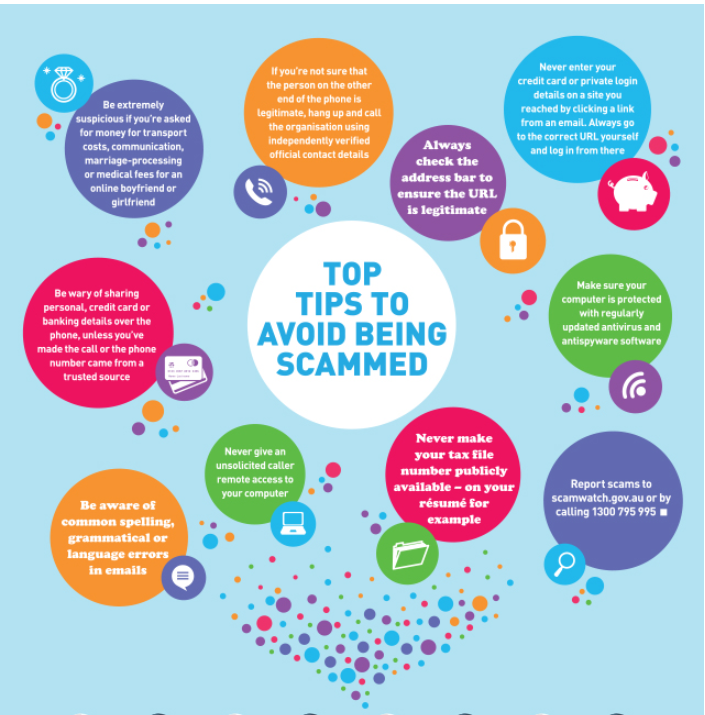
Image courtesy of https://www.choice.com.au/electronics-and-technology/internet/internet-privacy-and-safety/articles/online-scams-and-how-to-avoid-them
Next time I’ll get personal and share the email that sparked this series examining the anatomy of a romance scam. I received it on LinkedIn, which I use for business, where you’d think I’d be safe from scammers. Nope, think again.
Please share in the comments or via my contact form your experiences of being scammed on a dating site or social media platform. I’d love to read your opinions too!
Late addition:
I found out about this docuseries called LOVE FRAUD, which focuses on an unlikely alliance formed by several American women who were conned by their supposed online ‘boyfriend’. He was an average American Joe who got his kicks from manipulating and love-bombing women – and it wasn’t even really about the (smallfry) money. Very similar to my Catfishing story. Check out the article if you’re interested or look for it on Stan or Netflix.

 (Midlife) Adventures in 21st Century Dating & Mating