Romance scams and how they suck you in

In the last article I discussed common traits of scammers – think bad grammar and spelling, poor grasp of normal language syntax and phrases, frequent mentions of god or religion, as well as the more insidious fraud of identity theft (usually stealing people’s photos and videos from social media) and the spinning of downright lies designed to draw victims in, preying on sympathy and generosity.

Too good to be true

The FTC) says, “romance scammers lure people with phony online profiles, often lifting photos from the web to create attractive and convincing personas. They might make up names or assume the identities of real people. Reports indicate the scammers are active on dating apps, but also on social media sites that aren’t generally used for dating. For example, many people say the scam started with a Facebook message.”

Australia’s ACCC has excellent information on its page about common scamming ‘red flags’ or techniques, warning signs, how to protect yourself, real life stories and clues for spotting a fake profile. Choice magazine also has a thorough examination of the practice and detailed tips.

A reminder again – if something seems too good to be true, it probably is. And, never give money to people you have only ‘met’ online and never met in person.

The popular demographics of people scammed

People (who said they were) aged from 40 to 69 reported losing money to romance scams affecting Americans at the highest rates – more than twice the rate of people in their twenties. At the same time, people 70 and over reported the highest individual median losses at $10,000.

The largest cohort of Australians who lost money to scammers or reported them were aged between 34 and 64, and 55.5% were women (43.3% men and 1.3% other). American and British stats are similar. The most popular channel that scammers used was social media (33/7%) the internet more broadly or mobile apps, including dating sites.

In my first article on romance scams I cited 2018 figures of 21,000 reports about romance scams, where people reported losing a total of $143 million. It’s important to note here that these are only the scams that are reported, so it’s impossible to guess how many people are too embarrassed or ashamed to admit to financial or other abuses.

What’s worse – losing money or hope?

Losses often run into the hundreds of thousands but it’s the emotional manipulation and abuse that really scars.

“It’s a big problem because of the emotional devastation. We hear stories of suicides related to online dating scams. I think they’re one of the nastiest of the scams going around,” says ACCC deputy chair Delia Rickard.

A fascinating report, The Psychology of the Online Dating Romance Scam, was conducted over a year-long period by Professor Monica Whitty of The University of Leicester.

She described the phenomenon of ‘hyper-personal’ relationships – the perfect name for what I’ve experienced many times with people online. She also said that “individuals [regardless of gender] higher on romantic beliefs were more likely to be victims of the scam.”

Whitty describes the pressure the scammer increases on the victims through love-bombing. “The victims often stated that they felt closer to the fictitious relationship than any other previous relationship.”

The research examined the emotional and psychological impact on the victims after the scam.

“All participants were affected negatively by the scam. They suffered a range of emotions and effects, including shame, embarrassment, shock, anger, worry, stress, fear, depression, suicidal feelings and post-traumatic stress disorder. Some described the feeling of being mentally raped.

“None of the victims interviewed had appeared to fully recover from the crime. Techniques some were using to cope included writing down their thoughts, working on campaigns to raise awareness of the crime, and thinking positively about a new life.”

In 2015, BBC News reported yet another scammer’s conviction in Britain for defrauding women of 250,000 pounds. An investigating police officer said that it was “an example of how an individual could sit in front of a computer and destroy another person’s life.”

When another victim is just a mouse-click away, it seems that personal culpability can be easily denied, even on the cusp of a prison sentence.
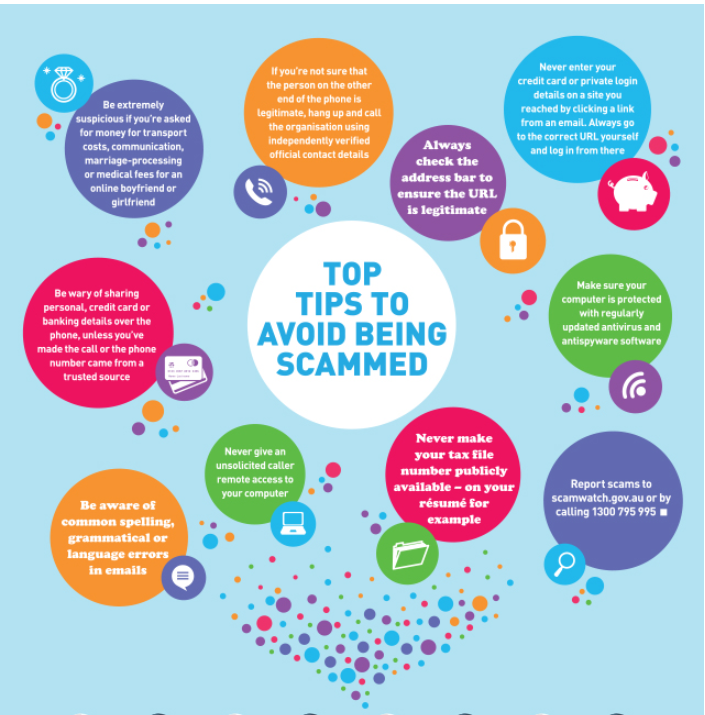
Choice mag scamming graphic

Image courtesy of https://www.choice.com.au/electronics-and-technology/internet/internet-privacy-and-safety/articles/online-scams-and-how-to-avoid-them

Next time I’ll get personal and share the email that sparked this series examining the anatomy of a romance scam. I received it on LinkedIn, which I use for business, where you’d think I’d be safe from scammers. Nope, think again.

Please share in the comments or via my contact form your experiences of being scammed on a dating site or social media platform. I’d love to read your opinions too!

Late addition:

I found out about this docuseries called LOVE FRAUD, which focuses on an unlikely alliance formed by several American women who were conned by their supposed online ‘boyfriend’. He was an average American Joe who got his kicks from manipulating and love-bombing women – and it wasn’t even really about the (smallfry) money. Very similar to my Catfishing story. Check out the article if you’re interested or look for it on Stan or Netflix.

 

How romance scams work

In the last article I shared the shocking facts of how much money people who fall prey to romance scammers lose – think tens of millions – and just how common romance scams are on social media, especially dating sites.

bleeding heart

I always thought the people who fall for these scams must be incredibly naive and desperate until I was scammed way back when I first started dating again in midlife.

I’ve written here about being catfished, but I was saving the story of being targeted by an African romance scammer for the book behind this blog. Now that I am trying to shed 15,000 words from the book manuscript, I will serialise it here, so stay tuned if you’re interested in this seedy topic.

The nub of the story is that anyone can be conned.

It just depends on circumstances and how much you want to believe something. You know the saying ‘if it’s too good to be true then it probably is’ – at several stages I thought about getting that tattooed on my wrist as a harsh reminder.

Romance scams work on the premise that everyone on a dating site (or even on social media more generally) is lonely and longing to be loved. While this is obviously untrue, some demographics are more popular than others. I hate to say it, but people in midlife can be easy targets.

Imagine this: you’re fresh out of a long marriage, you don’t understand these new dating rules, you want to play around and have fun but you’re secretly worried about dying alone and never being loved again. You’re still idealistic and want to return to those halcyon days of young love and passionate romps along the beach or in the park. Whatever, you get my drift.

While this was never my particular weakness, scammers tap into all these feelings of vulnerability and hope that so many people on dating sites keep buried like tender shoots of a budding possibility.

What to look out for in your online interactions

If you want to read more, this and this are good summaries of the mechanics of a scam, but here’s my take:

  • A scammer always uses a fake profile – this can be meticulously researched, down to using photos stolen from social media, dubbed videos, fake airline tickets (you can read about all of these in my coming series from my real life), and tailored words that conform to a pattern. They may be posing as an US or UN solider, a businessman or engineer/high–status overseas worker (for men) or a nanny/teacher/beauty salon owner (women).
  • A scammer has a set template to work from that usually starts with tragedy – maybe they’ve recently been bereaved and are struggling with living as a widow/er, maybe they lost a child in an accident or been left as a sole parent to a young child, maybe they run a successful business but have struck hard times. Whatever the story, things start out bright and soon change.
  • A scammer escalates the ‘relationship’ right from the get–go – they are the penultimate love bombers and they know how to press your buttons. The good news is that they’re easy to spot and once you’ve been targeted, it will never happen again. Messaging may start off light and breezy but frighteningly soon it becomes a daily habit start starts on waking and ends on sleeping. Sometimes this is maintained by a team of scammers, or sometimes it’s just one who has plenty of spare time.
  • A scammer wants to get you off the site where he lured you in – they’ll move you to What’s App, Kik, email or Facebook Messenger or some other platform that is either anonymous or populated with the fake images/stories. They want you all to themselves so they can do their dirty work, which is conning you! It starts with compliments then declarations of strong feelings.
  • A scammer usually has poor grammar or is clearly not a speaker of your native language – watch out for odd expressions, mentioning God/Christianity or variations of overt faith, poor punctuation/spelling (think bunched up commas and old fashioned language). There may be a disconnect between their photo and their language use or ‘accent’.
  • A scammer always asks for money at some point – but not right away. They want to build the illusion first and that takes time. If they’re good at their craft, within a week or two they’ll launch the attack. The ploy may take longer and involve phone calls, Skype or video calls (without the screen, with a mysteriously broken or malfunctioning camera), lengthy emails and of course text messages at all hours of the day or night. Then they’ll strike disaster and ask you to rescue them.
  • A scammer always tries to be plausible – they don’t make it obvious at all. They’ve built up a fairytale populated with images from someone else’s page/profile who didn’t have their privacy settings property secured. They’ve established a rapport and lured you into a false sense of security. You think you ‘know’ this person, after all you’ve been having pillow talk or sexting or long phone conversations into the evening. You may have shared your deepest fears or feelings. You may believe that you’ve never felt this way before. You may also be quashing a teensy doubt that maybe they’re really not who they say they are – and so you want proof.
  • A scammer will usually go to great lengths to spin the story – my scammer was part of a group that had access to video dubbing and forgery technology. It’s not hard to manufacture an airline ticket if you do your research to align the flights with your location, and have the visual smarts to make it look real. Audio dubbing takes more effort, but the results can be used over and over so it’s a good investment. They will have tangible details that can sometimes be checked, and a problem that can only be solved with – you guessed it – your money. They’ve exhausted all their other options. You are their last hope and they’ll repay you (with interest) in the very near future. Don’t fall for it! Delete anyone online who asks for money.
  • A scammer may come back for seconds – even if they come clean and admit they’re a scammer, they might try for the next wave. “It started out as a scam because I’m so poor/desperate/mixing with the wrong crowd, but now I’ve fallen in love with you and I’m declaring my adoration as the real me.” It’s a worrying pattern and unlikely to be true, so cut ties and delete. Never send money to someone you haven’t met in person. Also watch out for blackmail that may arise out of sending illicit or compromising photos of yourself – another reason never to do this with your face showing (if at all).

Next time I’ll focus on the demographics of who is scammed, and the ghastly feeling when your stomach falls through your mouth and you realise you’ve been conned.

Please share your story or opinion in the comments or privately via my contact form.